
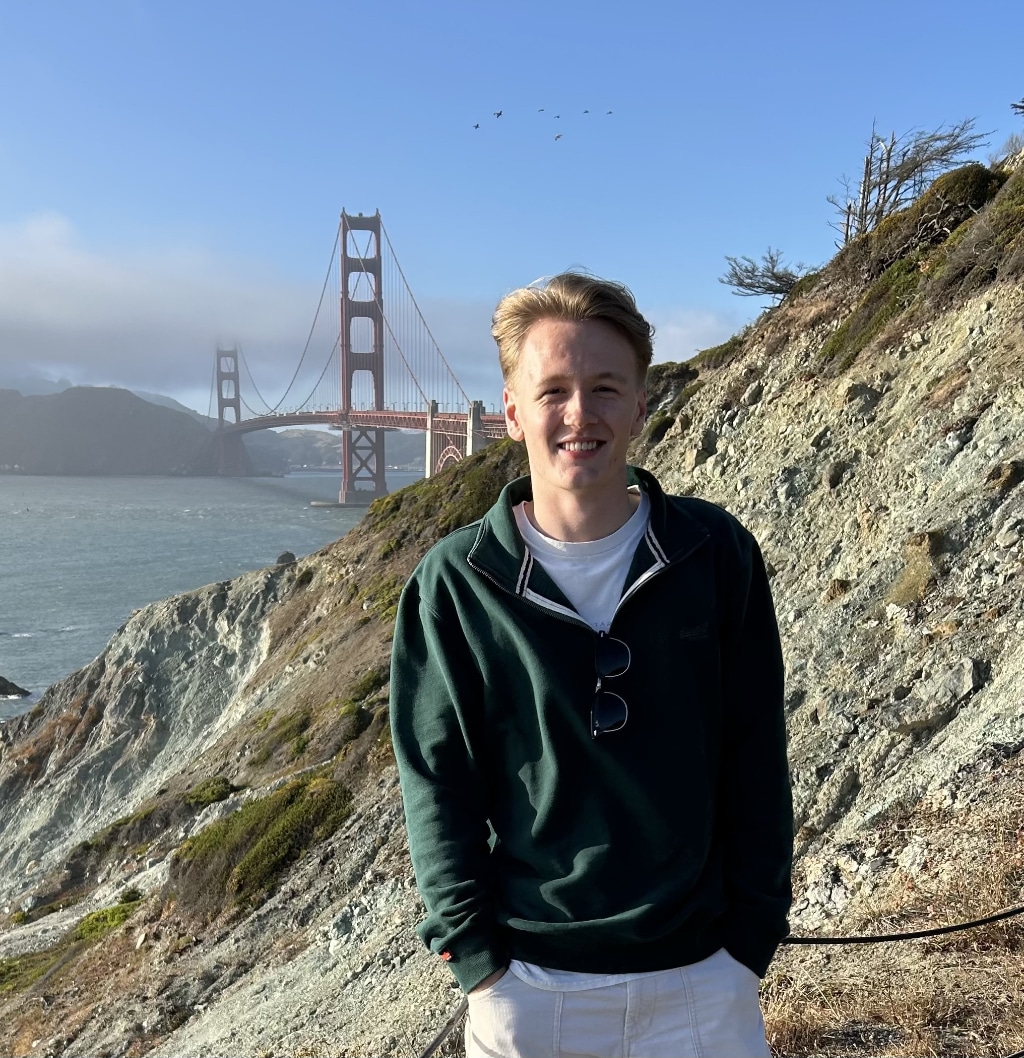
Chris Paton, Golden Gate Bridge, San Francisco
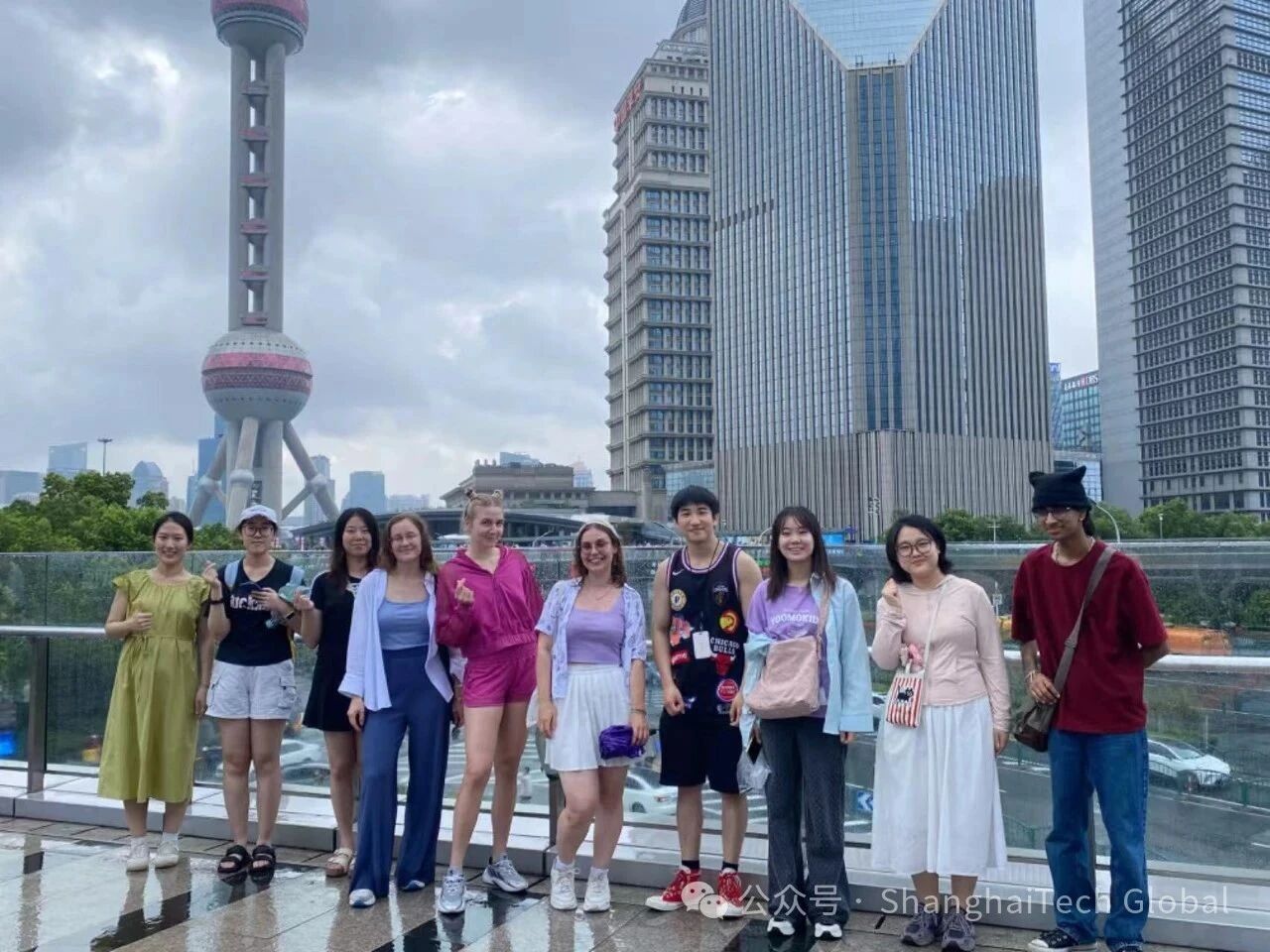
Shailen Patel with lab mates in Shanghai
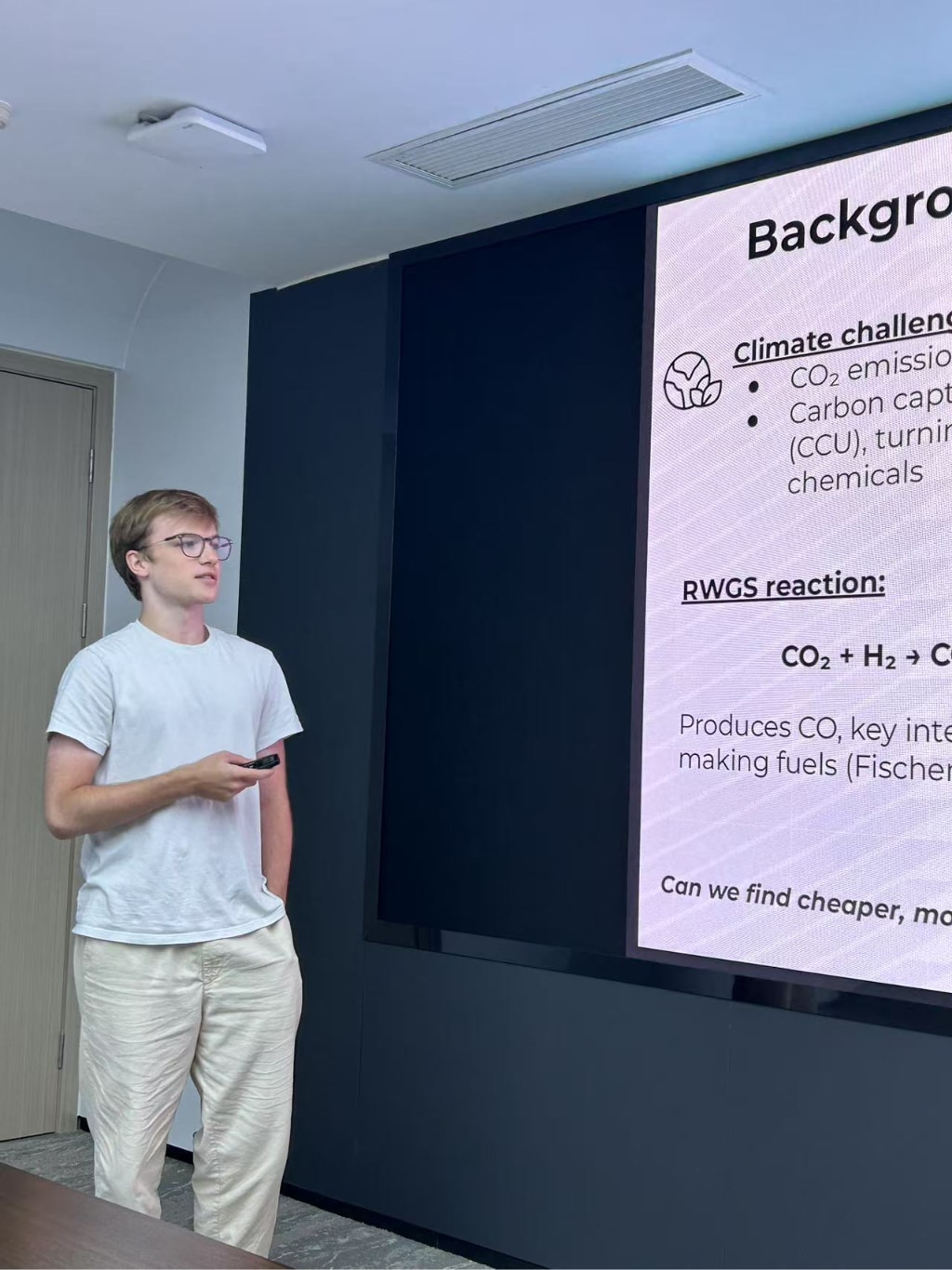
Luca Viviano presenting his findings
Each summer, EPA Grants open the door for Lincoln undergraduates to step beyond the lecture theatre and into the lab, gaining first-hand experience of scientific research. Funded by the E P Abraham (EPA) Research Fund, these grants provide vital financial support of up to £3,000, enabling students in Chemistry, Biomedical Sciences, Medicine, Physics and Engineering, particularly where there is a connection with the biosciences, to undertake summer research placements.
In 2025, eight students were supported through the scheme. Some remained in Oxford, while others travelled as far as California and Shanghai. Wherever they were based, each gained practical experience that strengthened their studies and will shape their future careers. Lincoln and the grant recipients are deeply grateful to the EPA Trust, and we greatly value the historical connection we have built with the Trust.
Where EPA grants took our students in 2025
For Laila Al-Terawi (2023), the grant supported a placement at the University of Oxford’s Department of Biochemistry, where she joined the Sarkies Lab. Her first project involved assessing ethanol resistance of yeast that have been mutated to lack certain genes that are essential for epigenetic mechanisms. The experience gave her the chance develop a wide range of laboratory skills, from designing her own experiments on yeast growth to using CRISPR techniques in C. elegans. She said: “Thanks to the support from this grant, this internship has had a lasting impact on my personal and professional development. It affirmed my interest in biochemical research and provided me with the opportunity to establish a rich set of skills in molecular biology and biochemistry, as well as to enhance my communication skills and my scientific network.”
Shai Patel (2023), meanwhile, spent eight weeks at ShanghaiTech University in a lab led by Dr Yuu Kimata. His work focused on how specific proteins influence cell proliferation and differentiation, using genetic knockdown and imaging techniques. Alongside the science, the placement offered a realistic view of research in practice, including the challenges of experimental error and inconclusive results, and how these are part of the process.
In California, Christopher Paton (2022) undertook a ten-week internship at Stanford University’s Bioengineering Department which combined hands-on research with exposure to the wider biotech landscape of Silicon Valley. Working on CAR-T cell therapy, he contributed to research aimed at improving cancer treatment by engineering immune cells to better withstand hostile tumour environments. Chris said, “I found the experience incredibly inspiring and have come back to Oxford this year wanting to work even harder to make as much of a positive impact with my research, as the labs over at Stanford are every day. Ultimately this incredible summer would never have been possible without the hugely generous funding that was provided to me by Lincoln’s alumni, and I will always treasure this experience that Lincoln made possible for me.”
Luca Viviano (2023) completed his research internship at Huazhong University of Science and Technology in Wuhan where he focused on carbon capture processes, investigating how catalysts can make reactions more efficient and sustainable. He said, “I gained a huge amount of experience through this, and learnt so much about this area of chemistry and how it can intersect with sustainability practices. Thanks to the grant, I was able to gain such an amazing and unique experience studying across the world, and it was incredibly helpful in deciding my future academic interests.
Not all placements required international travel. At King’s College London, Annabel Ruckledge (2022) joined the Proteomics Core Facility, working with advanced mass spectrometry technologies to analyse proteins. During her placement, she was involved in several projects carrying out complex sample preparation, operating the mass spectrometer to acquire data, and then performing data analysis and interpretation using specialised proteomics software.
She said, “It was very rewarding to work in this dynamic environment, and the experience has reinforced my passion for biochemistry and made me even more motivated to pursue a career in research.”
Taken together, these placements show the breadth of opportunities made possible by the EPA Grants. Whether close to Oxford or on the other side of the world, each student was able to immerse themselves in research, develop practical skills, and gain a clearer sense of where their studies might take them next.