
Ancient electrum coin showing a worn stamped design with abstract punch marks on one side.
© Ashmolean Museum, University of Oxford
Ancient electrum coin with a rough surface and a partially visible animal motif in relief.
© Ashmolean Museum, University of Oxford
Gold Croeseid coin featuring a detailed design of a lion and a bull facing each other.
© Ashmolean Museum, University of Oxford
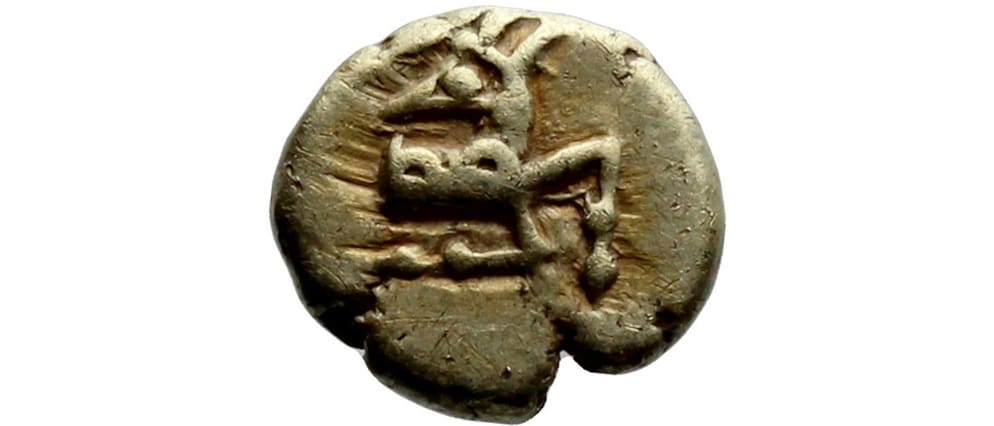
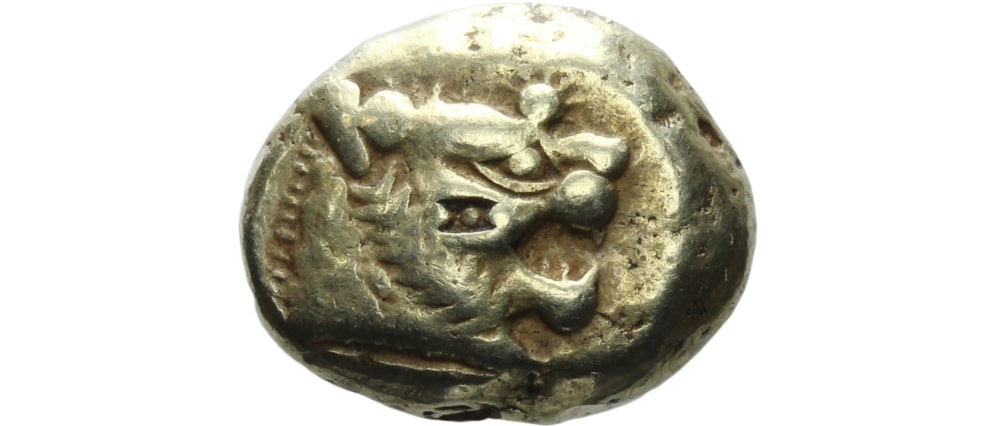
In a project jointly funded by the ISIS Neutron and Muon Source and Lincoln College, lecturer Dr George Green and his DPhil student Alice Main are using neutron and muons to examine 2600-year-old coins from the Kingdom of Lydia. Using the MuX instrument at ISIS, the team is specifically investigating how the coins were manufactured and the composition of the electrum – the gold-silver alloy – the coins are made of.
Alice’s DPhil is supported through an ISIS Facility Development Studentship and Lincoln's Kingsgate Fund. The coins she is studying came from the collection of the Ashmolean Museum in Oxford. “I’m well-placed at Oxford. There’s the Ashmolean, teaching and support at the university, and we’re just 30 minutes from ISIS,” says Alice. Her doctorate relies on an unusual combination of skills, combining both classical archaeology and modern investigative techniques.
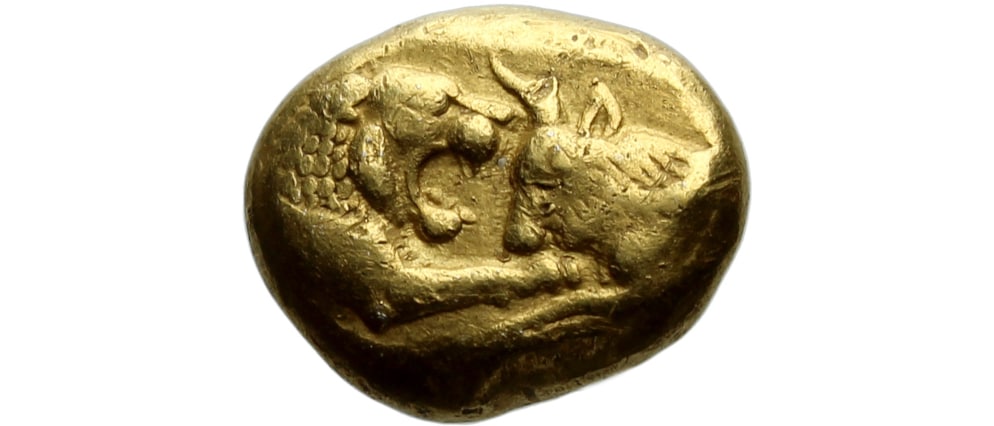
Among the small group of coins that the team brought to ISIS was a coin from the reign of King Croesus, renowned in antiquity for his immense wealth. Croesus ruled the Kingdom of Lydia, in what is now modern-day Turkey, from around 560 to 546 BC. The Croeseid coin is made of 94% gold and features a detailed design of a lion facing a bull. It forms part of one of the earliest bimetallic coin series, with both gold and silver coins sharing the same design.
Previously, researchers have used X-ray fluorescence to analyse the coins’ composition, but this only reaches a depth of around five microns. To look deeper, George and Alice are using muons, which can penetrate much further into the material, allowing greater insight into how the coins were made and the composition of the original material to create them. Crucially, the technique is non-destructive, allowing rare and fragile objects to be studied without any damage.
“Little is known about the development of Lydian coinage, but muon-based analysis offers a non-destructive opportunity to investigate its precious metal content. MuX is helping us explore if the earliest coinage in the western world emerged from experimental forays by Lydian metalworkers producing highly inconsistent alloys, or if the coinage reflects a confident mastery of gold-working, with a high degree of alloy consistency across most of the coins sampled,” says Alice.
Alice's doctoral project forms part of a wider programme of research using muons in archaeology and heritage that has been pioneered at Lincoln College. It began when George was the Lavery-Shuffrey Fellow in Roman Art and Archaeology and is now the centre point of a partnership between ISIS and the University of Oxford. "Lincoln was integral to incubating this partnership," says George, now Associate Professor in Classical and Scientific Archaeology - a newly created post as part of this collaboration. "Now with the support of the Kingsgate fund, we have been able to push the boundaries even further, setting up the first formal studentship at ISIS specifically in the humanities, looking to uncover the history hidden within the world's first precious metal coins."