
Blog Post
Winter Gardening

Mike Hawkins
Head Gardener
We are often asked as gardeners, “What do you do over winter?!” Well, unfortunately, it is not all just tea and biscuits! Much of the winter garden jobs are focused on preparing for the year ahead, although a changing climate is showing us that tasks such as mowing are continuing into winter more often.
The biggest and most important task to be carried out is pruning. We prune plants for their health, for aesthetics and to promote flowering and fruiting. Plants which produce flowers and fruit on the same year’s growth, like roses, grapes, wisteria, apples and pears can be pruned following the 4 d’s method – Dead, Dying, Damaged and Diseased shoots are removed before looking at the overall shape of the plant and removing crossing and inward growing stems. However, care must be taken to avoid pruning early spring flowerers, like witch hazel (Hamamelis mollis) and flowering redcurrent (Ribes sanguinium), both of which can be found in the Grove. These plants flower on growth produced in the previous year, so pruning now would remove flower buds and stop them from flowering this year. These plants would be pruned in spring and early summer after flowering has finished.
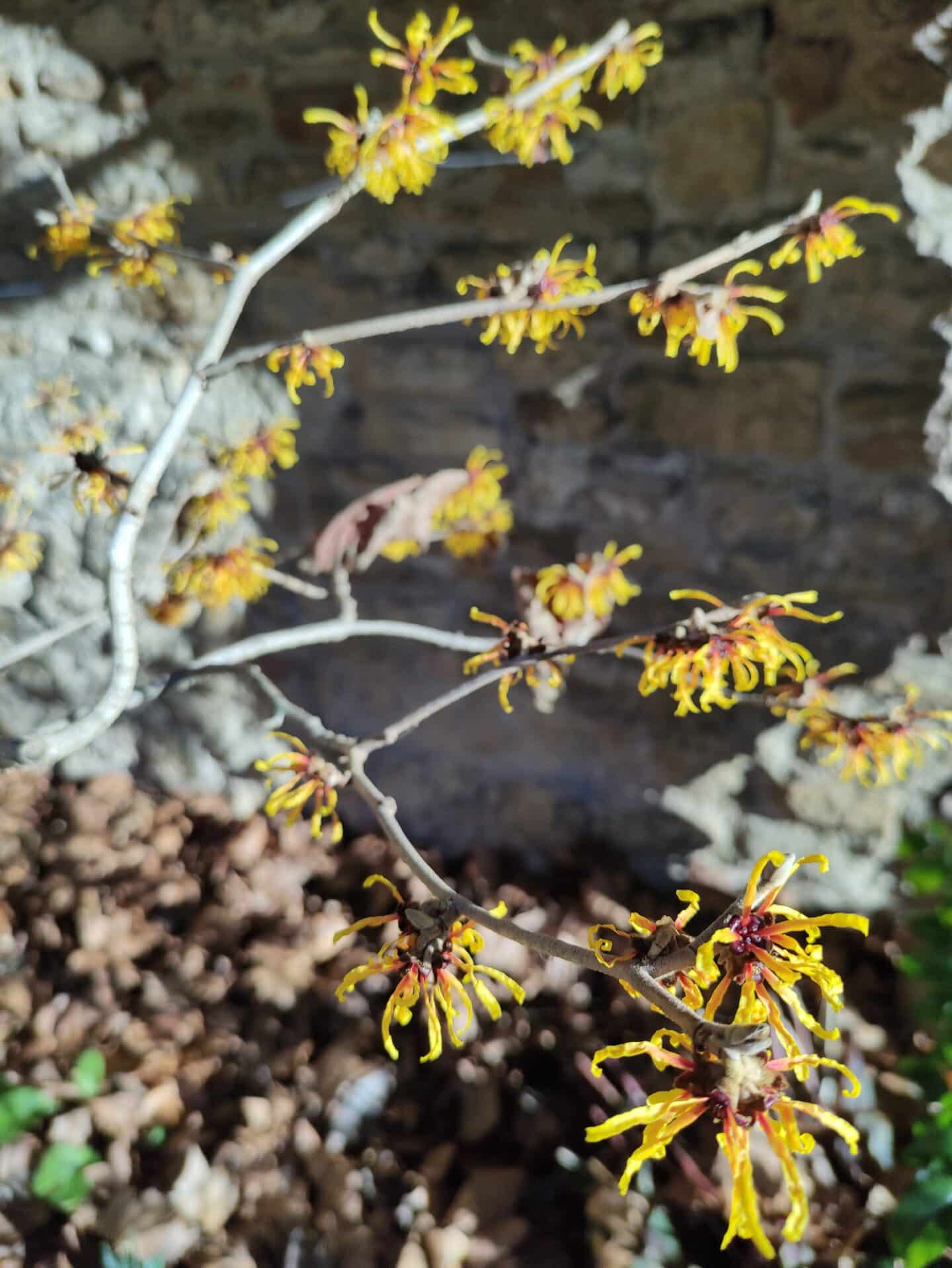
Witch hazel in the Grove
January is when we start to sow seeds destined for window boxes and containers across all our college sites. We also make use of our polytunnel to overwinter our tender plants, such as the Chapel Quad lemon tree and Pelargoniums. Woody plants can also propagated over winter through hardwood cuttings, especially plants that produce vigorous, long stems such as roses, dogwood and grapes.
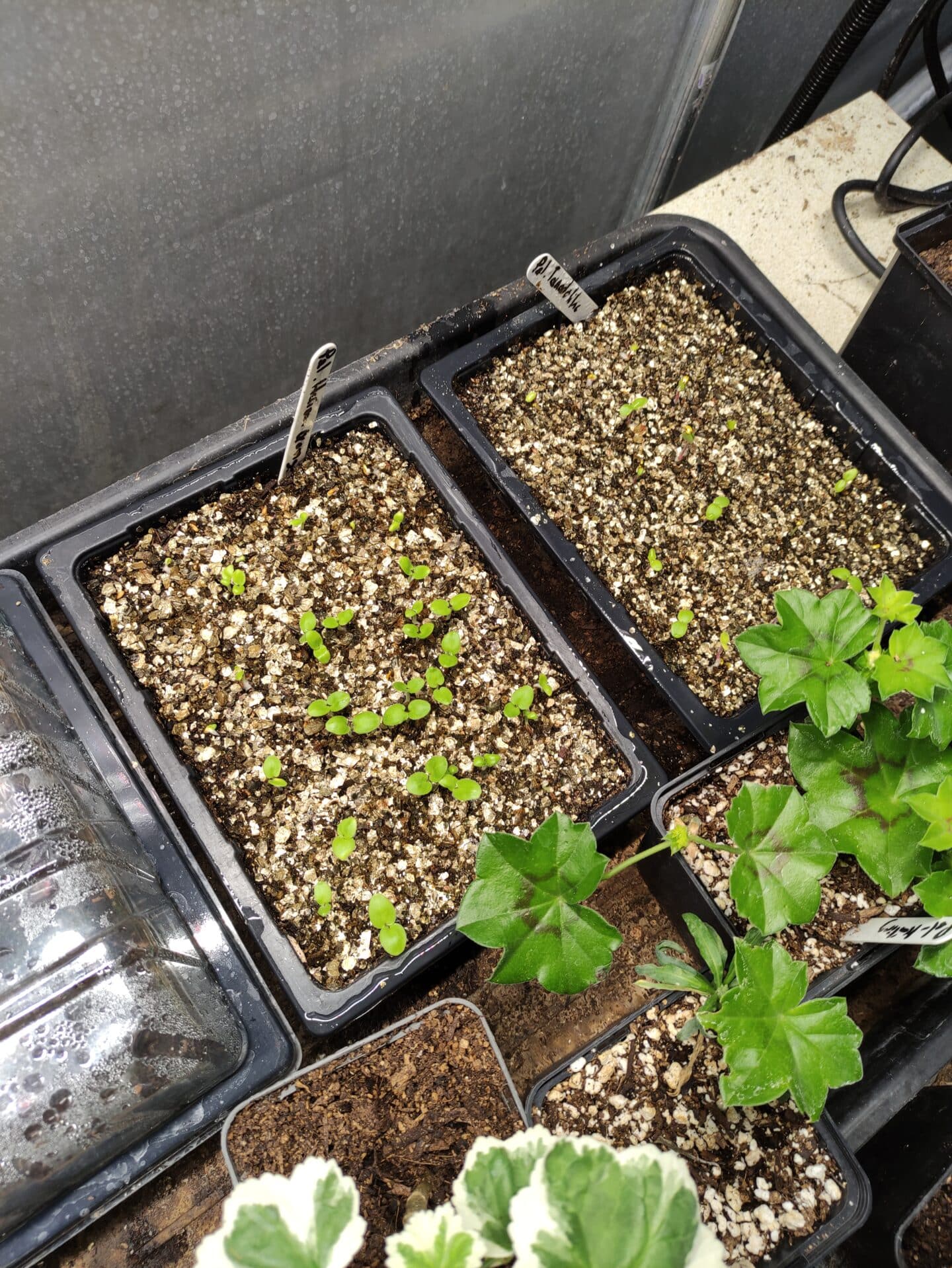
Pelargonium seedlings starting to emerge
Bulb planting is usually seen as an autumn job, but December is now considered the best month to plant tulips, as planting them into soil that is still warm in November makes them more susceptible to disease.
When trees and shrubs are dormant over winter they can be safely lifted and moved without too much disturbance to the roots. We can buy plants in this way too in the form of ‘bare root’, which are only available between November and March but are cheaper to buy as they are field grown rather than pot grown. As long the ground isn’t frozen, winter is a great time to plant trees and large shrubs as time is given to establish the key relationship between roots and soil before the plant starts to put on growth in spring. We recently planted a small grove of slim Himalayan birch trees in the Rector’s garden to replace a problem tree that was causing damage to the Chapel. I am excited to see how they develop over the coming years. The ghost white stems are already adding extra interest to the area and we will continue this project with underplanting to be carried out in spring.

Betula utilis ‘snow queen’
