Blog Post
The Head Gardener on Lincoln's Iconic Boston Ivy

Mike Hawkins
Head Gardener
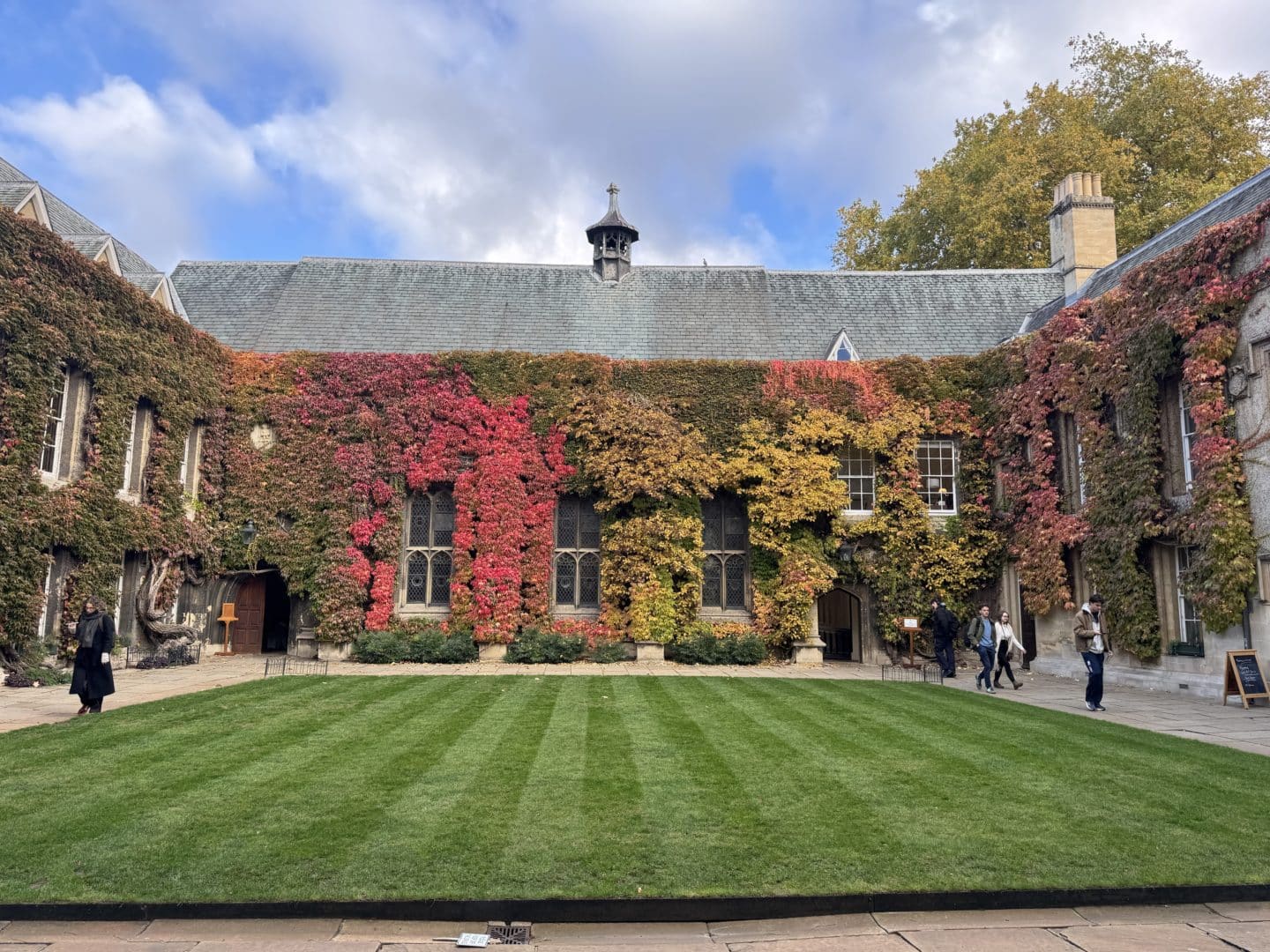
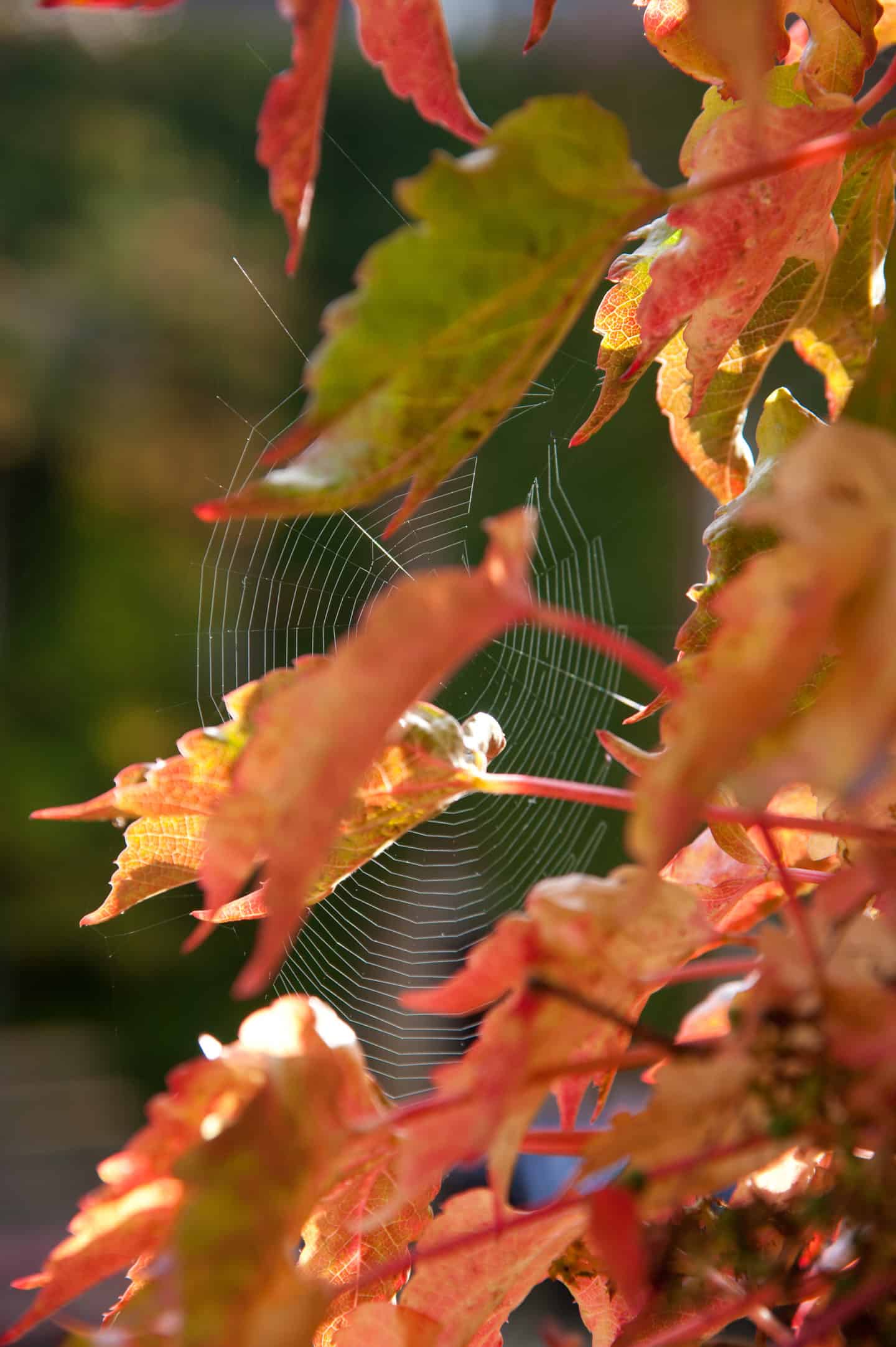
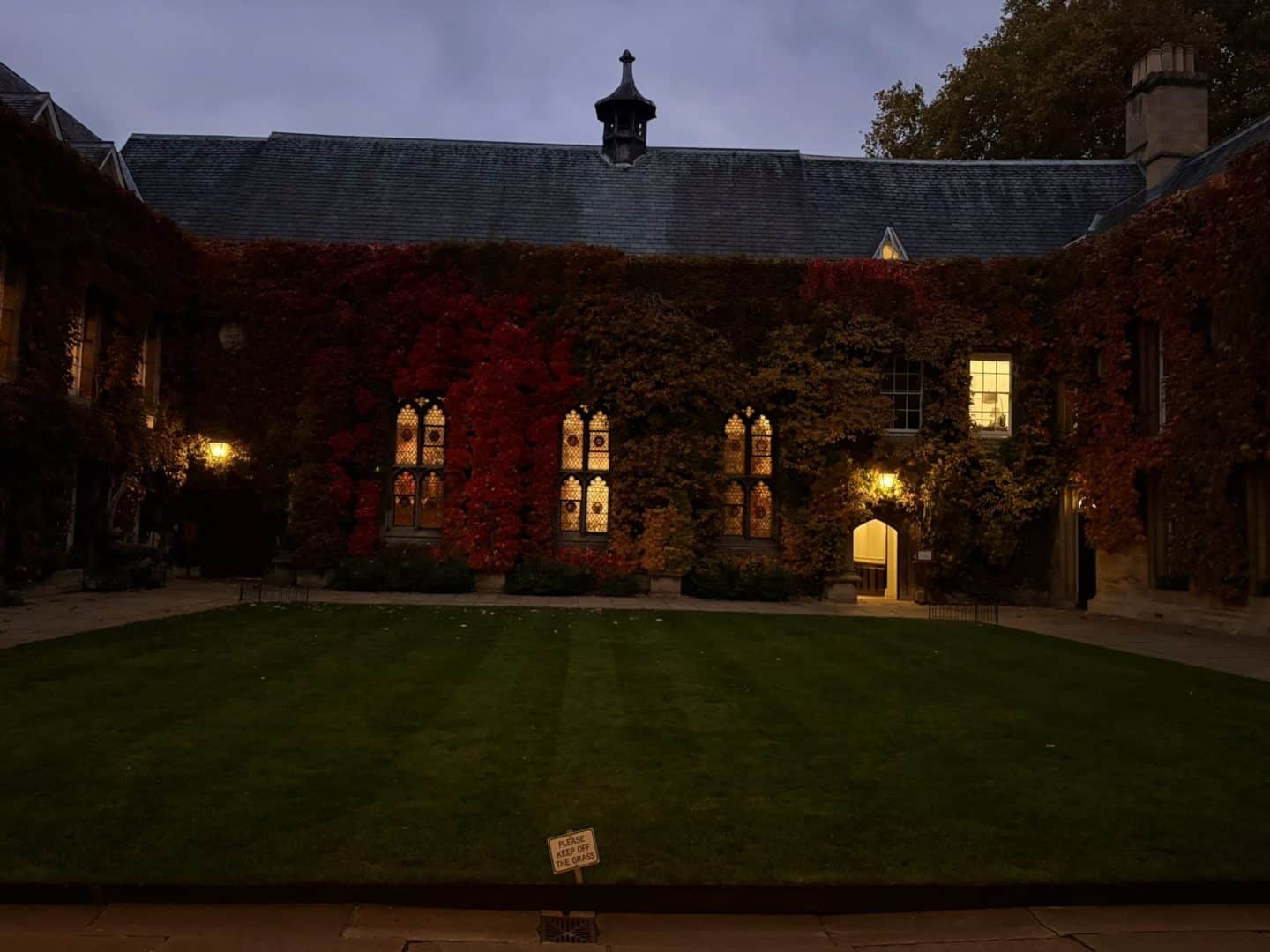
As the temperatures begin to drop and days get shorter one thing that always brightens up college is the iconic Lincoln Boston ivy. Throughout most of October and November the leaves turn from summer green, to purple before peaking at a glorious scarlet before going into winter dormancy.
Lincoln has a long tradition of growing climbing plants on the walls of Front Quad, dating back to the late 1400s when a vine was planted in honour of Lincoln's second founder, Thomas Rotherham.
Boston ivy, or as it is botanically known Parthanassissus tricuspida is a deciduous climber native to east Asia. It also has the other common name of Japanese creeper. This could be one reason why Boston ivy is often misidentified as Virginia creeper Parthanassissus quinquefolia. While the two share many similarities, it is the leaf shape that defines them. Boston ivy has only three points to its leaf, hence the epithet tricuspida, while Virginia creeper has five.
Unlike true ivy in the Hedera genus, Boston ivy does not send roots into stone but uses pads that secrete a natural adhesive making it far less damaging. In fact, a single pad can support thousands of times its own weight, and this what allows the plant to cover the walls so easily. In its native habitat, it would use this ability to climb its way through tree canopies.
In a warming climate, covering walls in plants has a positive effect to cool buildings by creating shade and humidity as leaves transpire.
It also has excellent biodiversity benefits. Its tiny flowers, which come out in August, are loved by pollinating insects. In addition, the skeleton of stems - left after the leaves drop - provides fantastic winter protection for invertebrates as well as nesting places for birds, making it an important ecosystem in its own right.